

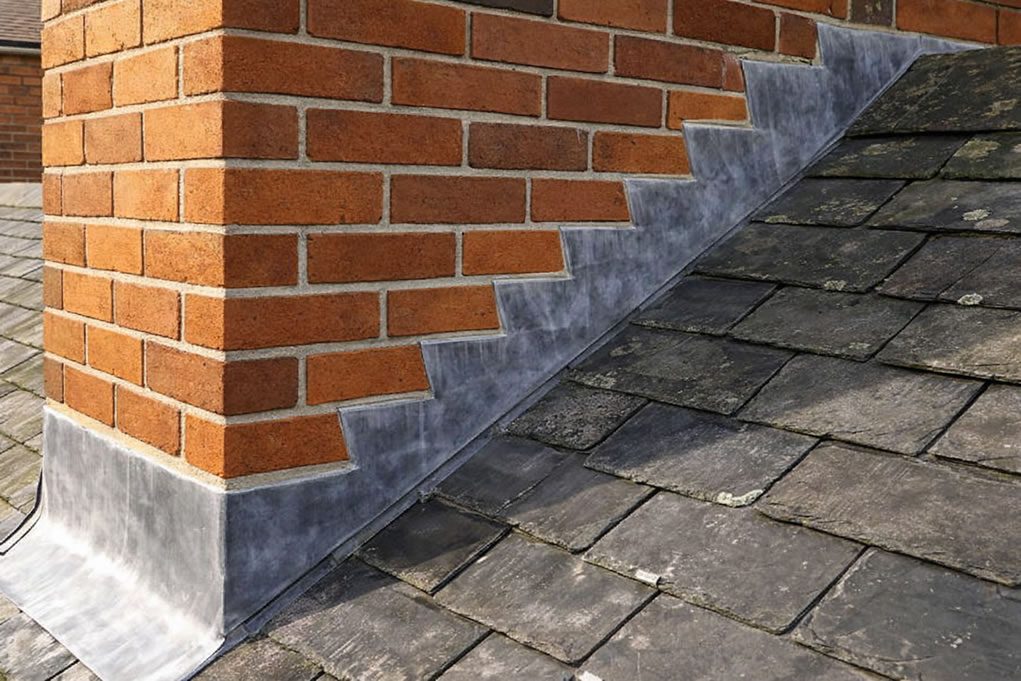
On this page you’ll find typical chimney flashing repair costs in the UK, what drives the price, what’s included in a good quote, and when replacement makes more sense than repair.
If you want an accurate price for your home, you can request free, no-obligation quotes from local specialists.
Typical chimney flashing repair costs (UK)
Most price variation comes down to access (scaffold vs ladder/tower), how much leadwork needs work, and whether the job needs step flashing/soakers or rear tray/back gutter work.
| Job type | Typical UK cost range | Notes |
|---|---|---|
| Minor flashing repair (re-dress / re-secure) | £250 – £650 | Best when lead is sound but lifted/loose |
| Replace a small section of lead flashing | £400 – £900 | Used when lead is split/cracked in one area |
| Replace step flashing + soakers (one side) | £650 – £1,400 | Often involves lifting tiles/slates |
| Full chimney flashing replacement (all sides) | £900 – £2,500+ | Larger scope; access and roof type matter |
| Rear tray / back gutter repairs (pitched roofs) | £600 – £1,800+ | Common leak point; can be labour-intensive |
| Scaffolding (if required) | £500 – £1,500+ | Often the biggest cost driver |
These are guide ranges. Quotes can sit outside them depending on chimney position, roof pitch, height, and local access constraints.
What affects chimney flashing repair cost?
1) Access method (biggest cost driver)
If a roofer can work safely from ladders or an access tower, the cost is usually lower. However, many flashing jobs need stable access for precise lead detailing, so scaffolding is common on taller properties or steep roofs.
2) Repair vs replacement
- Repairs are cheaper when the lead is still in good condition and has simply lifted.
- Replacement costs more, especially if multiple sections are cracked, fatigued, or repeatedly patched with sealant.
3) Roof covering type (tile vs slate)
Slate roofs can require more careful lifting and refitting around the chimney, which can increase labour.
4) The parts that need work (scope)
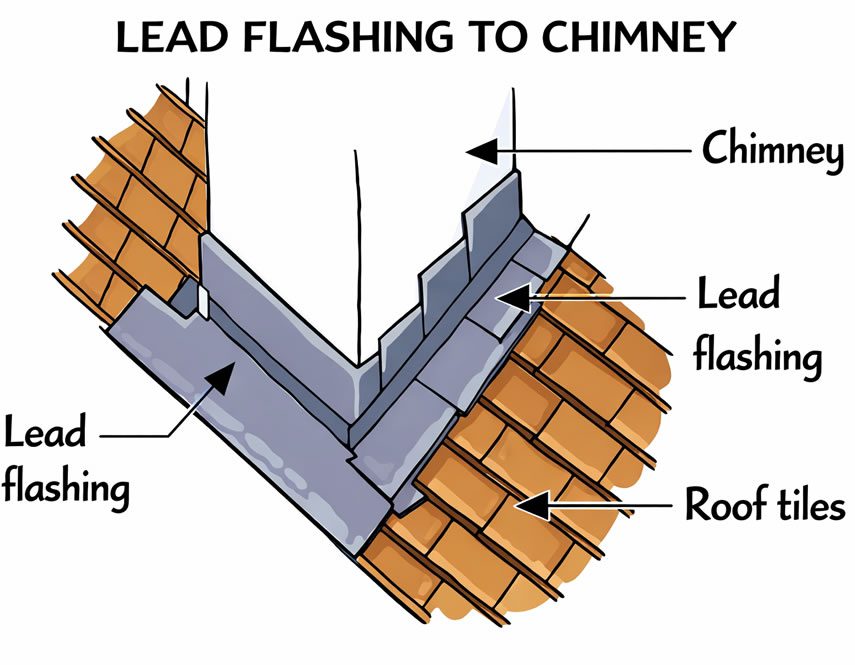
Chimney leadwork often includes:
- apron (front)
- step flashing (sides)
- soakers (often hidden under tiles/slates)
- back tray/back gutter (rear of chimney on pitched roofs)
- chase pointing (mortar where lead enters brickwork)
If more than one of these needs attention, costs rise.
5) Chimney position and roof pitch
Front chimneys are often easier to access than rear chimneys over extensions or conservatories. Steeper roofs can also increase access complexity.
6) Add-on issues found during inspection
Roofers often spot related defects once they’re up there, such as cracked flaunching, loose pots, or failing mortar joints. Combining repairs while access is in place can save money compared to separate call-outs.
What a good chimney flashing quote should include
To compare like-for-like, a quote should state:
- whether it’s a repair or replacement
- which sections are included (apron, steps, soakers, rear tray)
- whether tiles/slates will be lifted and refitted
- whether chase pointing will be renewed
- access method (ladders/tower/scaffold) and whether included
- waste removal and tidy-up
- timescale and start date estimate
- VAT included or excluded
- warranty/guarantee terms
- proof of public liability insurance
If you see “seal around chimney” without leadwork detail, ask for a clearer scope.
Chimney flashing repair vs replacement: cost comparison
| Scenario | Typical approach | Cost expectation |
|---|---|---|
| Lead lifted but not cracked | Re-dress and secure + chase tidy-up | ££ |
| Small split/crack in one area | Patch/replace that lead section | ££–£££ |
| Multiple cracks / heavy sealant patches | Replace leadwork sections | £££ |
| Missing/failed step flashing and soakers | Renew steps/soakers (tiles lifted) | £££ |
| Rear tray/back gutter leaking | Repair/renew tray + detailing | £££–££££ |
In simple terms: repairs can be good value if the lead is still healthy. However, if the lead is fatigued or the detailing is wrong, replacement often saves money long term because you avoid repeat leaks.
Do you need scaffolding for chimney flashing repairs?
Not always — but it’s common. Scaffolding becomes more likely when:
- the chimney sits high above the ridge
- the roof is steep
- the chimney is at the rear or over an extension
- the job involves replacing step flashing/soakers
- the rear tray/back gutter needs work
Ask whether scaffolding is included and who arranges it.
How to get accurate chimney flashing repair quotes
To get the best quotes, include:
- postcode area and property type
- where you see damp/leaks (chimney breast, ceiling, loft)
- when it happens (storms only vs ongoing)
- which side the chimney is on (front/rear)
- photos: full stack + close-up of flashing if safe
- access notes (extension/conservatory below, restricted parking)
Photos can help roofers quote without guesswork and reduce the chance of surprises.
Get free quotes for chimney flashing repair
Want a firm price for your property? Request free, no-obligation quotes for chimney flashing repair or replacement. Add a couple of photos if you can, and we’ll match your enquiry with suitable local specialists so you can compare options and choose the best fit.
Chimney flashing repair cost FAQs
How much does chimney flashing repair cost in the UK?
Minor chimney flashing repairs often cost a few hundred pounds, while replacement work can be £1,000+ depending on access, how many sides need work, and whether scaffolding is required.
Is chimney flashing repair cheaper than replacement?
Usually, yes — if the lead is still sound. If the lead is cracked or repeatedly patched, replacement can be better value long-term because it reduces repeat leaks.
Can a sealant patch fix flashing?
Sealant can help temporarily, but it often fails due to movement and weather. Proper repairs focus on leadwork details, step flashing/soakers, and chase pointing.
What makes flashing repairs expensive?
Scaffolding, rear tray/back gutter work, steep roofs, and replacing step flashing/soakers usually increase the cost.