If you want to stop water getting in and keep chimney pots secure, a chimney flaunching repair often makes a big difference. Below you’ll find clear signs to look for, what a proper repair includes, and how to get accurate quotes from local specialists.
What is chimney flaunching?
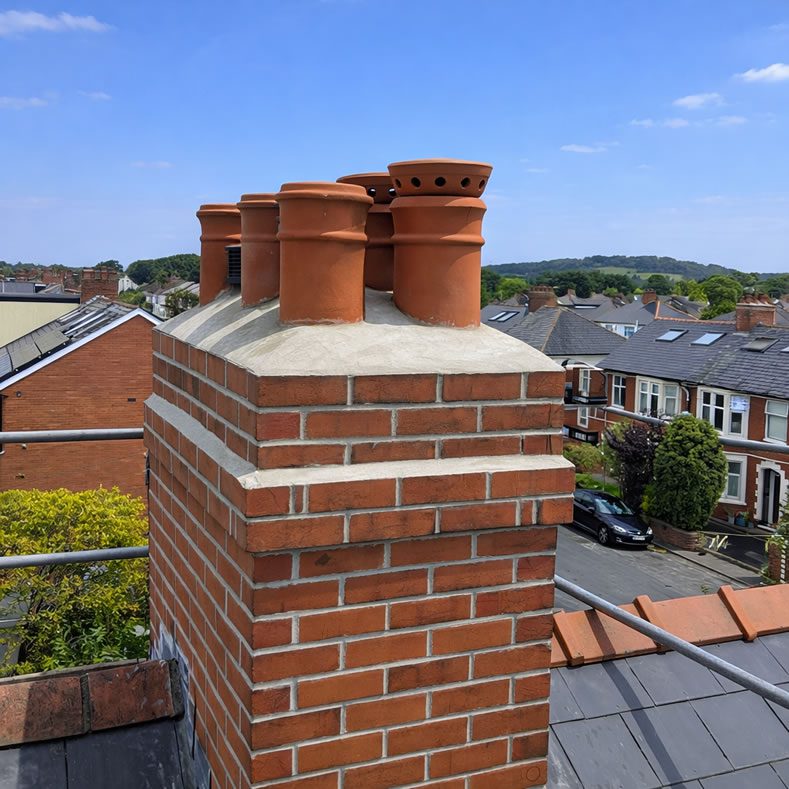
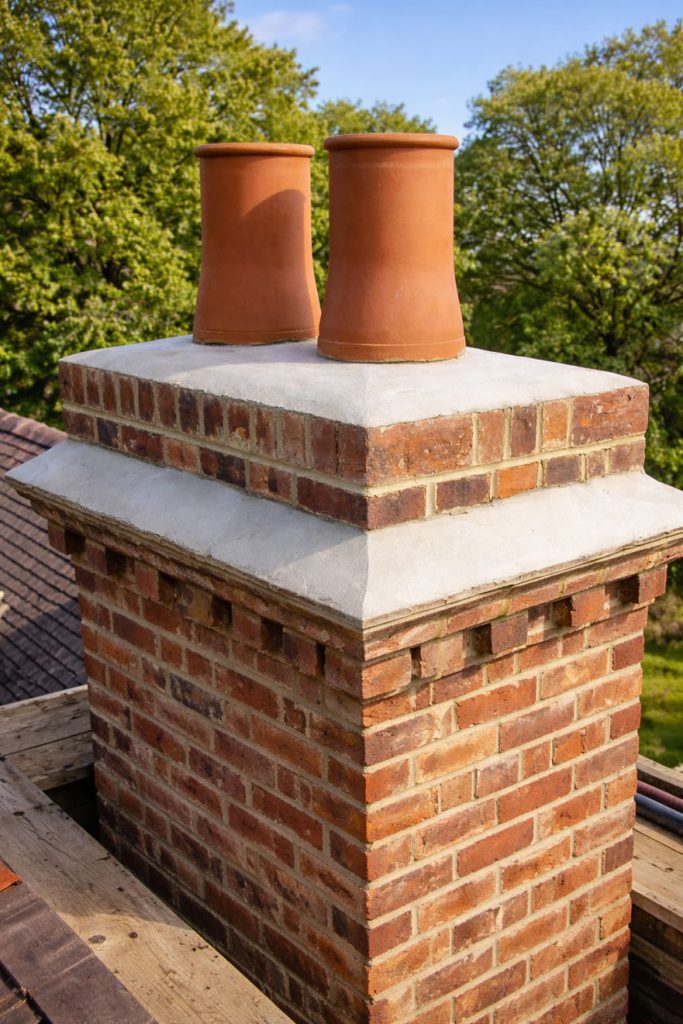
Flaunching is the mortar/cement “crown” around the chimney pots at the very top of the stack. Roofers shape it with a gentle fall so water runs away instead of pooling.
In other words, good flaunching:
- holds chimney pots firmly in place
- directs rainwater away from the stack
- reduces water absorption into bricks and mortar below
Because flaunching sits on the highest point of the house, it faces constant wind, rain, and freeze–thaw cycles.
Signs you need chimney flaunching repair
You may need flaunching repair if you’ve noticed:
- Visible cracks in the cement/mortar around the pots
- Missing chunks or crumbling flaunching
- Chimney pots that look loose, tilted or unstable
- Water pooling on top of the stack after rain
- Damp patches or staining on chimney breasts
- Leaks that appear mainly during heavy rain
- Mortar debris in gutters after windy weather
If a pot looks loose or there’s a risk of falling masonry, keep people away from the area below and arrange professional help.
Why chimney flaunching fails
Flaunching is exposed to the harshest conditions on the house. Common causes of failure include:
- Freeze–thaw cycles: water enters small cracks, freezes, expands and breaks the flaunching apart
- Ageing mortar: older flaunching can become brittle and start to crack
- Poor falls/drainage: if water sits on the stack, it accelerates breakdown
- Movement/vibration: minor movement can crack flaunching around pots
- Storm damage: high winds can stress pots and damage top-of-stack mortar
- Poor previous repairs: thin surface patches often fail quickly
Flaunching repair vs other top-of-stack fixes (comparison)
| Problem area | Typical symptom | What repair is usually needed |
|---|---|---|
| Flaunching cracked/broken | Water pooling, loose pots, leaks | Re-form/renew flaunching, re-bed pots |
| Chimney pots loose | Pots wobble/lean, visible gaps | Re-bed or replace pots + renew flaunching |
| Missing/damaged cowl/cap | Rain entering flue, damp around fireplace | Fit correct cowl/cap (often with ventilation) |
| Mortar joints failing lower down | Recessed/crumbly mortar | Chimney repointing (+ brick replacement if needed) |
| Flashing defects at roof junction | Leaks near chimney line, loft damp | Lead flashing repair/replacement |
Often, roofers will check all of these areas while addressing flaunching, because multiple defects can contribute to leaks.
What’s involved in chimney flaunching repair?
A proper flaunching repair typically includes:
1) Safe access
Depending on height and roof pitch, roofers may use ladders, a tower, or scaffolding. Top-of-stack work is exposed and needs safe access.
2) Removing failed flaunching
Loose and cracked flaunching is removed back to a sound base.
3) Re-bedding pots (if needed)
If pots are loose, they’re re-bedded properly. Damaged pots may be replaced.
4) Reforming new flaunching with correct falls
New flaunching is formed around pots with a proper slope so water sheds away from the stack rather than pooling.
5) Checking caps/cowls and ventilation
If the chimney is unused, a ventilated cap/cowl may be recommended to reduce rain ingress while allowing airflow.
6) Clean-up and making good
A good contractor will remove debris and leave the roofline tidy.
Does flaunching repair stop chimney leaks?
If the leak is entering through the top of the stack, flaunching repair can make a big difference. However, chimneys can leak from several points, so it’s worth checking:
- lead flashing and soakers at the roof junction
- mortar joints (repointing) and spalled bricks
- caps/cowls and ventilation for unused flues
- rear trays/back gutters behind chimneys on pitched roofs
A roofer should identify the most likely entry point before recommending the fix.
How long does flaunching last?
Longevity depends on exposure and workmanship. Chimneys in very exposed locations (coastal or high wind areas) tend to need more frequent attention. Keeping the chimney weatherproof overall — sound flashing, mortar joints and suitable caps/cowls — helps top-of-stack repairs last longer.
Do you need scaffolding for flaunching repairs?
Not always, but it’s common for safe access. Flaunching is right at the top of the stack, so working safely and forming it properly can require stable access. The right method depends on your property, roof pitch, and chimney position.
What affects the cost of chimney flaunching repair?
Cost factors include:
- access method (ladders/tower/scaffold)
- number of pots and whether re-bedding is required
- whether cowls/caps are being fitted or replaced
- whether related repairs are needed (repointing, flashing, brickwork)
- property height and roof pitch
Photos help roofers quote accurately.
How to get accurate chimney flaunching repair quotes
Include:
- your postcode area and property type
- how many chimney pots you have (if known)
- symptoms (leaking, damp, loose pots, visible cracks)
- which side of the property the chimney is on
- photos (full stack + close-up of top if safe, plus indoor damp/staining)
Get free quotes for chimney flaunching repair
Use our enquiry form to request free, no-obligation quotes for chimney flaunching repair. We’ll match your enquiry with suitable local specialists so you can compare options and choose the best fit.
Chimney flaunching repair FAQs
What is chimney flaunching?
Flaunching is the mortar/cement layer at the very top of the chimney stack around the pots. It helps secure pots and sheds rainwater away from the stack.
Can cracked flaunching cause damp on the chimney breast?
Yes. Cracked or failed flaunching can let water into the top of the chimney, which may show up as damp or staining inside — particularly after heavy rain.
Do you have to remove chimney pots to repair flaunching?
Not always. Some repairs can be done around pots, but if pots are loose or the flaunching has failed badly, pots may need re-bedding for a lasting repair.
Is flaunching repair the same as repointing?
No. Repointing is repairing mortar joints between bricks lower down the stack. Flaunching repair is at the top of the chimney around the pots.
Do flaunching repairs need scaffolding?
Sometimes. Safe access is important, and scaffolding is common on taller or steeper roofs, or where the job involves multiple pots or additional repairs.