
This page explains the different types of chimney removal, when it makes sense, what’s involved, what to check before hiring a contractor, and how to request free, no-obligation quotes from local specialists.
What does “chimney removal” mean?
Chimney removal can refer to several different jobs. It’s important to be clear what you actually want removed.
1) Removing the chimney stack (above the roofline)
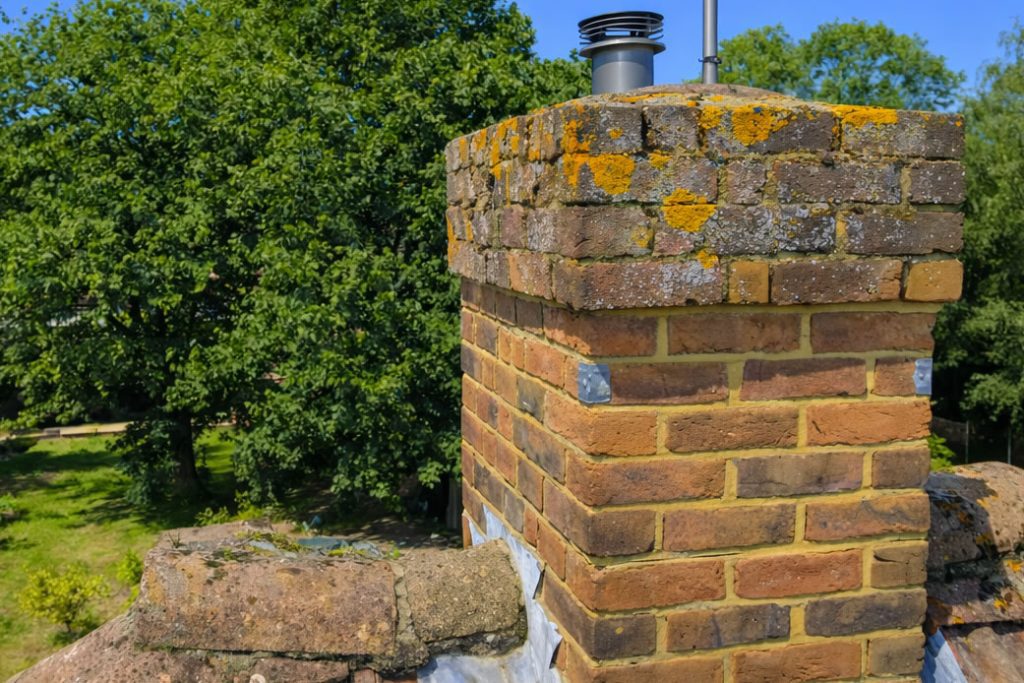
This is the visible brick stack on the roof. Removal usually includes making the roof watertight afterwards.
2) Removing the chimney breast (inside the house)
This is the internal part that projects into rooms. This can be done on the ground floor only, first floor only, or both — and it may require structural support.
3) Full chimney removal (stack + breast + flue)
A larger project, typically done during major renovation.
4) “Capping off” a chimney (not removal)
If you don’t want removal, you can sometimes cap and ventilate an unused chimney to reduce damp and stop rain ingress. This can be a good alternative where removal isn’t necessary.
Reasons homeowners choose chimney removal
Common reasons include:
- The chimney is redundant (fireplace removed, flue no longer used)
- Persistent leaks and ongoing repair costs
- The stack is unstable, leaning, or repeatedly failing
- You want to create space indoors by removing a chimney breast
- Renovation plans (loft conversion, reconfiguring rooms)
- You want to reduce long-term maintenance on an exposed stack
Cost of chimney removal is also something that should be looked at and getting quotes for it will definitely help to make a decision.
Chimney removal vs rebuild vs repair (comparison)
| Option | Best when | Pros | Cons |
|---|---|---|---|
| Repair | Single defect (flashing, flaunching, cowl, minor masonry) | Lowest disruption, often lower cost | May not last if the structure is failing |
| Partial rebuild | Stack brickwork is failing above roofline | Strong long-term fix | Higher cost; usually scaffolding |
| Removal | Chimney redundant or beyond economical repair | Removes future maintenance for that chimney | Roof must be made watertight; may involve structural considerations |
| Cap/vent | Chimney unused but otherwise sound | Reduces damp and rain ingress without major work | Still leaves stack in place to maintain |
Chimney stack removal: what’s involved?
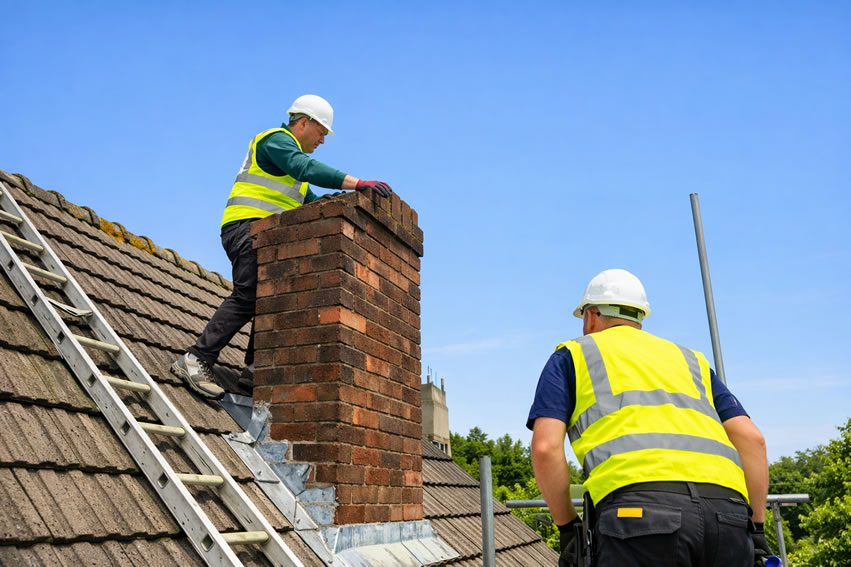
Removing the stack above the roofline typically includes:
- Safe access (often scaffolding)
- Careful dismantling of the stack down to a safe level (often to roofline)
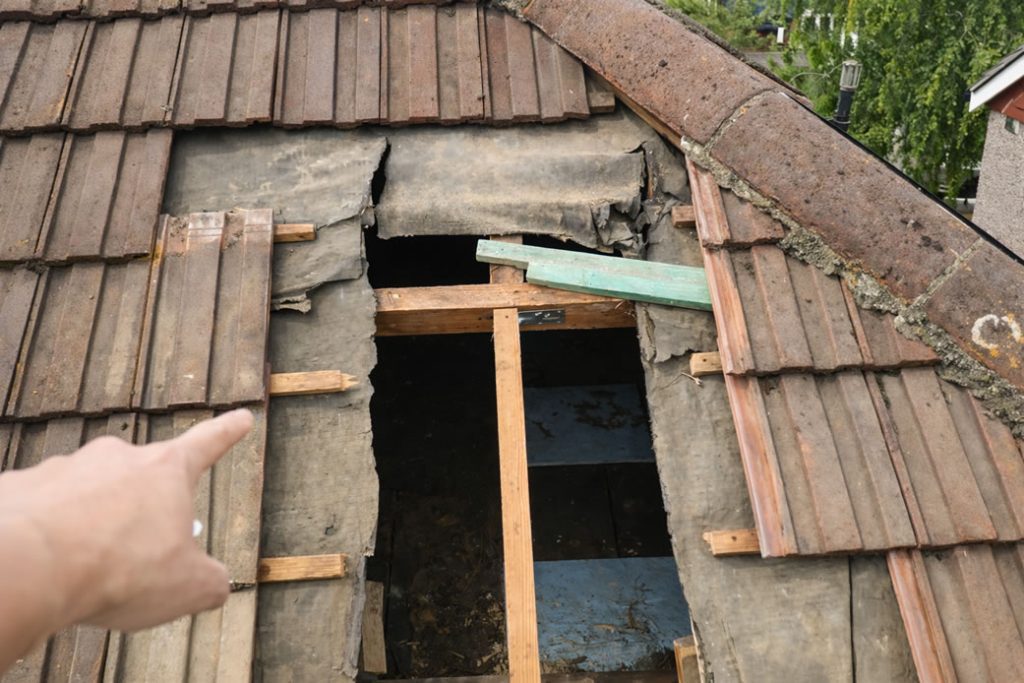
- Making the roof watertight again (replacing tiles/slates, underlay details)
- Repairing or renewing flashing where needed
- Clearing waste and tidying the site
In many cases, roofers will also advise whether any chimney pots need removing and how to finish the top of the remaining structure safely.
Removing a chimney breast: what’s involved?
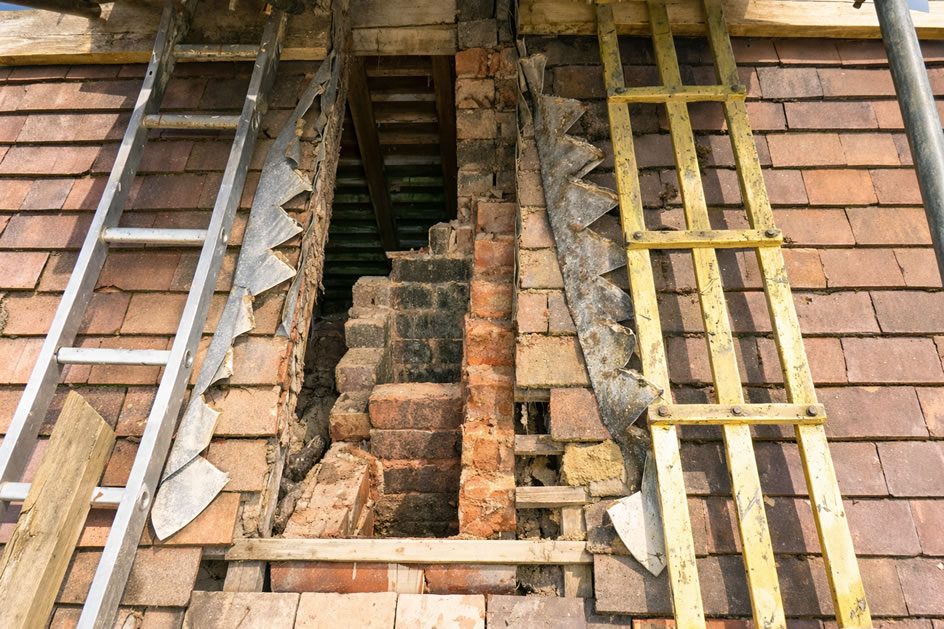
Chimney breast removal is different from roof work and can be more structural. It may include:
- Assessing whether the chimney breast is load-bearing
- Installing structural support (for example, a steel beam or gallows brackets where appropriate)
- Removing masonry and making good walls/ceilings
- Managing debris and waste removal
If you’re planning to remove a chimney breast, it’s important to get clear advice on structure and compliance. The exact approach depends on the property type, how much of the breast is being removed, and whether the chimney is shared.
Terraced and semi-detached homes: shared chimney considerations
Many UK terraces and semis have party-wall chimneys or shared stacks. If the chimney is shared or forms part of a party wall, removal work may require additional considerations, and you may need to follow the Party Wall etc. Act 1996 process depending on the scope. It’s a good idea to discuss this early when getting quotes.
Do you need planning permission or Building Regulations?
This depends on what you’re removing and your property type:
- Chimney stack removal is often permitted development, but listed buildings or conservation areas can have restrictions.
- Chimney breast removal can require Building Regulations considerations because it may be structural.
Always confirm requirements for your property and area before starting major removal work, especially if you’re unsure.
What should a chimney removal quote include?
A clear quote should state:
- Exactly what’s being removed (stack, breast, full chimney, or cap/vent)
- Whether scaffolding is required and if it’s included
- How the roof will be made watertight (tiles/slates, flashing, underlay)
- Waste removal and disposal
- Timescale and start date estimate
- VAT status (if applicable)
- Warranty/guarantee (especially for roof watertightness)
- Proof of public liability insurance
For chimney breast removal, it should also clearly state:
- What structural supports are included
- Any sign-off/compliance approach (where applicable)
How long does chimney removal take?
Timescales depend on access and scope:
- Stack removal may take a few days once access is in place
- Chimney breast removal can vary from a few days to longer depending on floors and structural work
- Weather can affect roof works and making the roof watertight
How to get accurate chimney removal quotes
To get accurate quotes, include:
- Your postcode area and property type
- Whether the chimney is shared (terrace/semi)
- What you want removed (stack, breast, or both)
- Any access notes (extension/conservatory below, limited parking)
- Photos of the chimney stack and the rooms affected (if relevant)
Get free quotes for chimney removal
Use our enquiry form to request free, no-obligation quotes for chimney removal. We’ll match your request with suitable local specialists so you can compare options and choose the best fit for your home.
Chimney removal FAQs
Can I remove a chimney stack and leave the chimney breast?
Yes. Many homeowners remove only the stack above roofline to address stability or leaks while leaving the internal chimney breast in place.
Can I remove a chimney breast without removing the stack?
Sometimes, but it depends on the structure. If the stack remains, it must be properly supported. Always get professional advice for structural safety and compliance.
Is chimney removal messy?
It can be. Removal involves masonry and rubble, so dust and waste are expected. A good contractor will protect the area and dispose of waste properly.
Will removing a chimney stop damp?
If damp is caused by rain entering the chimney or water ingress through the stack, removal (or properly capping/venting an unused chimney) can help. Damp can also be caused by condensation in unused flues, so ventilation is important.
Do I need scaffolding?
Often, yes — especially for chimney stack removal. Safe access is usually required to dismantle and make the roof watertight properly.