
The good news is that you can usually fix the problem with targeted brick replacement, repointing, and by dealing with the moisture source (often flashing, flaunching, or missing caps/cowls). This page explains the common causes, how roofers assess it, what repairs normally work, and how to get accurate quotes.
If you’re ready, you can request free, no-obligation quotes from local specialists.
What “crumbling chimney bricks” usually means
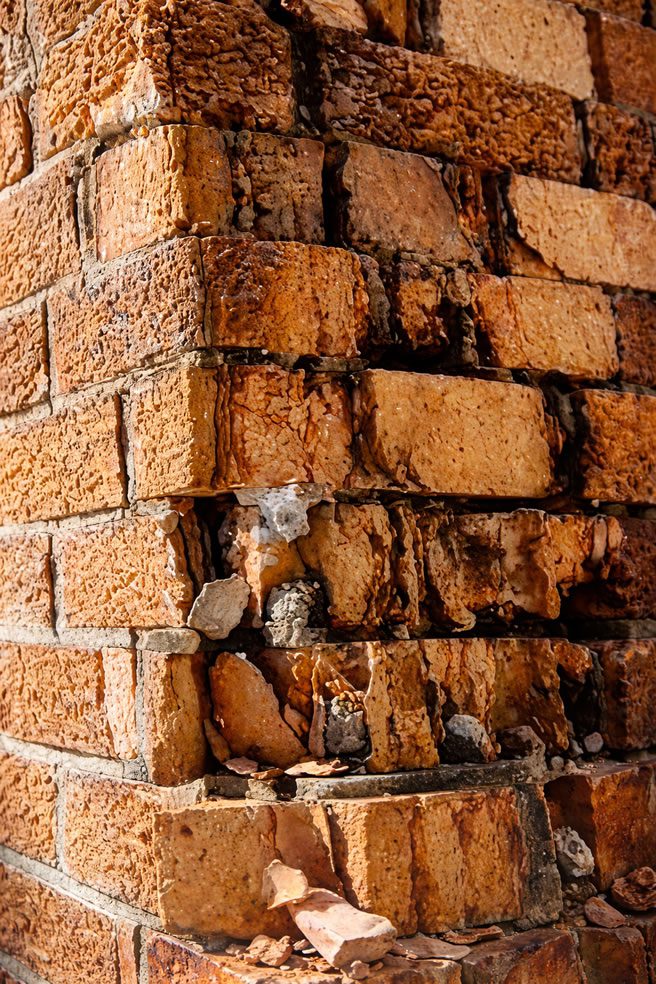
Homeowners use “crumbling” to describe a few different issues:
- Spalling: the brick faces flake off in layers
- Eroding mortar joints: the mortar turns sandy and falls out
- Loose bricks: bricks move or rock, or gaps open at corners
- Severe weathering: corners break away and bricks become soft
Because chimneys sit fully exposed, they often deteriorate faster than walls at ground level.
Common causes of crumbling chimney bricks
1) Water ingress and freeze–thaw damage
Rain soaks into the brickwork and mortar. Then, when temperatures drop, the water freezes and expands. Over time, the brick faces break down and joints open up.
2) Open mortar joints (repointing needed)
Once mortar joints crack or recess, the stack absorbs more water. As a result, bricks stay wet longer and crumble faster.
3) Failed flashing at the roof junction
Lifted or split lead flashing can feed water into the chimney and roof structure. That ongoing moisture accelerates brick and mortar decay.
4) Cracked flaunching and loose pots
If the top of the stack lets water in, bricks below can stay saturated. Cracked flaunching also loosens pots, which can worsen damage.
5) Missing cowls/caps (rain down the flue)
Rain can run down the flue and soak internal masonry, especially on unused chimneys.
6) Coastal exposure
Salt-laden air can keep masonry damp and speed up deterioration.
7) Poor previous repairs
Quick patch jobs, hard mortar on older stacks, or repeated sealant can hide issues and allow damage to continue underneath.
How to tell how serious it is
Some crumbling is cosmetic, while other cases create a safety risk. These clues help you judge urgency:
Higher risk signs (act quickly)
- bricks look loose or move when pressed (don’t approach if unsafe)
- debris falls into gutters or onto paths
- corners crack or separate, or the stack bulges
- the chimney appears leaning or out of plumb
- damage worsens after storms
If you suspect falling masonry risk, keep people away from the area below and arrange professional advice.
Lower risk signs (still worth fixing soon)
- small areas of spalling brick faces
- shallow mortar loss in a few joints
- isolated soft bricks that haven’t loosened the structure
Crumbling bricks: repair options (comparison table)
| Repair option | Best when | What it involves | Pros | Cons |
|---|---|---|---|---|
| Brick replacement + repointing | Localised crumbling/spalling | Remove damaged bricks, fit new, repoint joints | Durable and targeted | Needs good brick matching |
| Repointing only | Mortar failing but bricks mostly sound | Rake out and renew mortar joints | Prevents water ingress | Won’t fix damaged bricks |
| Partial rebuild (top section) | Widespread crumbling above roofline | Rebuild upper stack and weatherproof | Long-term fix | Higher cost, often scaffolding |
| Full rebuild | Damage extends lower down / structural issues | Rebuild stack to safe point | Most robust | More disruption/cost |
| Removal (where appropriate) | Redundant chimney, poor condition | Remove stack and make roof watertight | No future maintenance | Needs roof making good |
In many cases, roofers replace the worst bricks, repoint the stack, and fix the water entry point so the repair lasts.
What a proper chimney brick repair includes
A good repair plan should address both the visible damage and the moisture cause.
1) Diagnose the moisture route
The roofer should check:
- lead flashing and soakers
- flaunching and pot stability
- caps/cowls and rain entry down the flue
- mortar joints across the stack
- back tray/back gutter behind the chimney (pitched roofs)
2) Replace damaged bricks
They cut out the worst bricks and replace them with suitable bricks that match size and appearance where possible.
3) Repoint surrounding joints
They repoint the joints around repaired areas to seal and strengthen the stack.
4) Repair related defects
They may renew flashing, repair flaunching, or fit cowls/caps to stop water getting back in.
5) Make safe and tidy up
They remove debris and leave the roofline tidy and secure.
Should you paint or seal crumbling chimney bricks?
Painting or sealing might look like a quick win, but it can trap moisture if the chimney already has water ingress. As a result, it can worsen spalling in some situations. In most cases, it’s better to:
- fix the entry point,
- replace damaged bricks, and
- repoint with appropriate mortar.
A roofer can advise on whether any breathable treatment makes sense once the chimney is dry and sound.
Do crumbling chimney bricks mean you need a rebuild?
Not always. Many chimneys only need local repairs. However, if damage is widespread or the stack is unstable, a partial rebuild can be safer and more cost-effective than repeated patch work.
Use this quick guide:
- Localised damage + stable stack: brick replacement + repointing often works
- Widespread damage above roofline: partial rebuild may be best
- Leaning/loose structure: rebuild or removal may be needed
What affects the cost?
Cost depends on:
- access method (ladders/tower/scaffold)
- how many bricks need replacing and how widespread the damage is
- how much repointing is required
- whether flashing/flaunching/cowls need work too
- roof height, pitch and chimney position
- brick matching requirements (period homes)
Photos help roofers quote accurately.
How to get accurate quotes
Include:
- postcode area + property type
- where the crumbling is visible (front/rear/side)
- whether debris is falling into gutters or onto the ground
- any damp or staining indoors near chimney breasts
- photos: full chimney + close-ups of damaged bricks if safe
Get free quotes to fix crumbling chimney bricks
Use our enquiry form to request free, no-obligation quotes. Tell us what you’ve noticed and add photos if you can. We’ll match your enquiry with suitable local specialists so you can compare options and choose the best fit.
Crumbling chimney bricks FAQs
Why are my chimney bricks crumbling?
Most commonly, moisture has soaked into the chimney and freeze–thaw cycles have broken down brick faces. Open mortar joints, failed flashing, cracked flaunching, and missing cowls/caps can all keep a chimney wet and accelerate damage.
Is it dangerous?
It can be. Loose masonry at height can fall. If bricks are loose or debris is falling, keep people away from the area below and arrange professional help.
Can you fix it without rebuilding the chimney?
Often, yes. Many chimneys only need brick replacement and repointing. If damage is widespread or the structure is unstable, a partial rebuild may be safer.
Will repointing stop bricks crumbling?
Repointing can help prevent future damage by reducing water ingress through mortar joints. However, bricks that have already crumbled often need replacement.