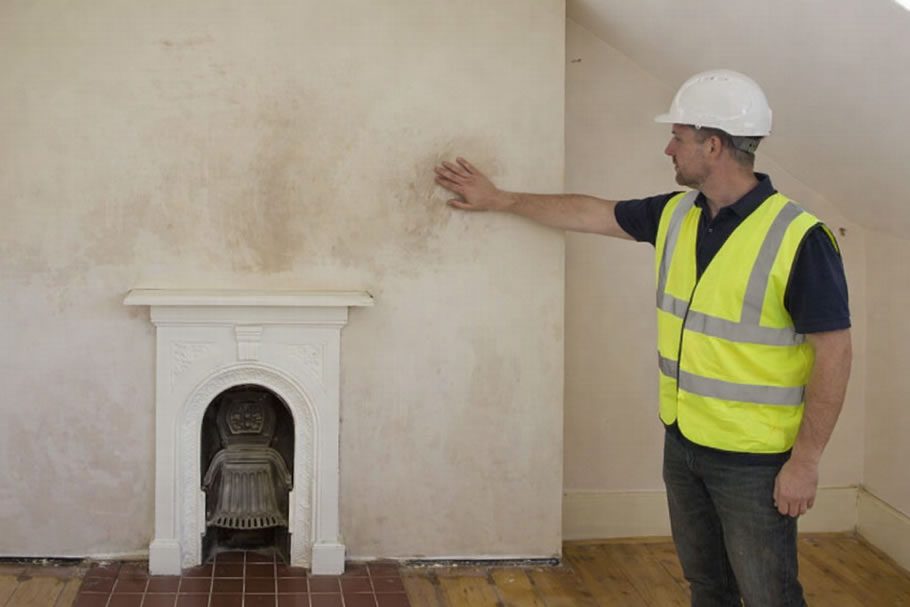

If you’ve been told you need “lead flashing repairs,” you’re not alone — flashing is one of the most common causes of leaks around chimneys and roof junctions in the UK. The confusing part is that flashing isn’t just one strip of lead. A proper chimney or wall junction often uses several lead components, and each one does a slightly different job.
This homeowner guide explains, in plain English:
- what lead flashing actually does
- the difference between aprons, step flashing, soakers, and back trays
- why leaks often show up in heavy rain and storms
- what “good” leadwork looks like (and the red flags to avoid)
- what to ask for in a quote so repairs last
What is lead flashing?
Lead flashing is a weatherproof barrier that sits where two parts of a building meet — usually where the roof meets:
- a chimney stack
- a wall
- a dormer
- a parapet
Its job is simple: direct water back onto the roof covering so it runs safely into gutters, instead of tracking into the roof structure.
Lead works well because it’s:
- durable
- flexible
- easy to shape around roof tiles/slates and brickwork
However, it only performs properly when it’s detailed and fixed correctly.
The main lead flashing parts (and what each does)

1) Apron flashing (front of the chimney)
Apron flashing sits on the lower/front face of the chimney (the side facing down the roof slope). It bridges the gap between the chimney and roof covering and directs water onto tiles/slates.
Where you’ll see it: the front of the chimney, lower edge.
What goes wrong: lead lifts, cracks, or gets patched with sealant.
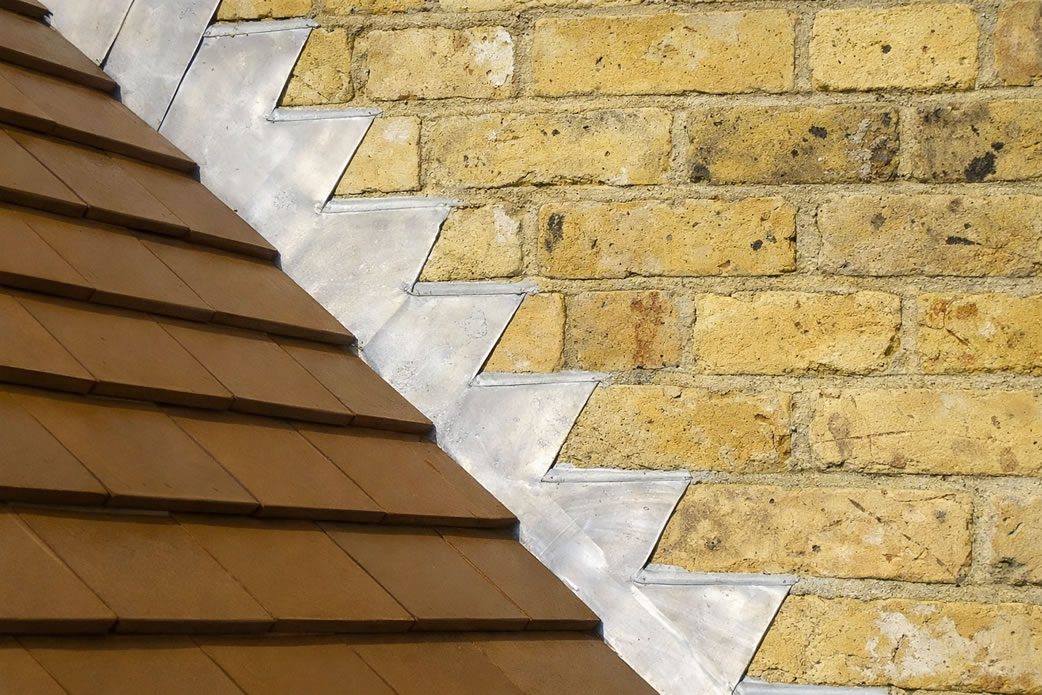
2) Step flashing (sides of the chimney)
Step flashing runs up the sides of a chimney. It uses separate “steps” that overlap each course of tiles or slates. That’s important because roof coverings aren’t flat — they step up as they rise.
Where you’ll see it: along the sides of the chimney.
What goes wrong: steps are missing, too short, or poorly overlapped.
3) Soakers (often hidden, but very important)
Soakers are individual pieces of lead that sit under each tile/slate at the chimney side. They catch water that gets under the tile edge and channel it safely back onto the roof.
On many roofs, step flashing and soakers work together:
- the soaker sits under the tile,
- the step flashing covers the tile edge above.
Where you’ll see them: often you won’t — they’re hidden under tiles/slates.
What goes wrong: soakers missing, corroded, or installed incorrectly.
If a roofer says they need to “replace soakers,” it usually means lifting tiles/slates around the chimney.
4) Back tray / back gutter (rear of the chimney on pitched roofs)
The back tray (sometimes called a back gutter) sits behind the chimney, on the uphill side. It takes water coming down the roof slope and diverts it around the chimney.
This area handles a lot of water, so it’s a very common storm leak point.
Where you’ll see it: behind the chimney on the upper roof slope.
What goes wrong: tray missing, undersized, blocked, or poorly detailed.
5) The “chase” (where lead enters brickwork)
The chase is a narrow channel cut into the brickwork where lead tucks in. The roofer then points it with mortar (or a suitable seal) to keep the lead secure and stop water tracking behind it.
Where you’ll see it: a thin line in the mortar joint/brickwork above flashing.
What goes wrong: mortar cracks, falls out, or the lead pulls away.
Why lead flashing leaks in storms
Heavy rain and wind-driven rain expose weak details fast. Common reasons leadwork leaks include:
- lifted lead creating a gap
- cracks in older, fatigued lead
- missing or poorly overlapped steps/soakers
- back trays that overflow or fail during heavy water flow
- failed chase pointing letting water behind lead
- repeated sealant patches that don’t move with the roof
That’s why a leak can appear only during storms even if everything looks “fine” in light rain.
What “good” leadwork looks like (homeowner checks)
You can’t inspect everything safely, but you can still look for quality signals.
Good signs
- Lead lies flat and looks neatly dressed to the roof profile
- Step flashing shows consistent overlap up the sides
- Corners look tidy (no big gaps or messy patches)
- Mortar at the chase line looks intact and continuous
- No excessive blobs of mastic used as the main seal
Red flags
- Lots of sealant smeared over leadwork
- Flashing visibly lifted or rippling
- Gaps at chimney corners
- Cracked mortar where lead enters the brickwork
- Leaks that keep returning after “repairs”
If you see heavy sealant everywhere, ask what’s underneath and whether the leadwork is actually sound.
Repair vs replacement: what usually makes sense
| Condition | Repair likely to work? | Typical approach |
|---|---|---|
| Lead lifted but still sound | ✅ Often | Re-dress and secure, renew chase pointing |
| Small split in one area | ✅ Sometimes | Local lead repair/section replacement |
| Multiple cracks or old patched lead | ❌ Usually not | Replace leadwork sections or full replacement |
| Missing/failed soakers or steps | ❌ Often | Lift tiles and renew soakers/steps correctly |
| Back tray defects | ⚠️ Depends | Repair/renew tray and improve detailing |
A good roofer will explain which parts need attention and why.
What to ask for in a quote (so you compare like-for-like)
Ask the roofer to specify:
- which lead elements are included (apron, steps, soakers, back tray)
- whether tiles/slates will be lifted and refitted
- whether chase pointing is included
- whether scaffolding is needed and if it’s included
- whether they’ll provide before/after photos
- warranty/guarantee terms for leak-related work
If a quote just says “seal around chimney,” ask for a clearer scope. Cost of flashing repairs varies depending on the job that’s needed.
Can you replace lead flashing with non-lead materials?
You’ll see products like flashband and other alternatives. They can be used in some situations, but many pros still prefer lead for durability and correct detailing on chimneys.
If a roofer suggests an alternative, ask:
- why they recommend it for your situation
- expected lifespan and warranty
- whether it matches the roof type and exposure
Need help with lead flashing repairs?
If you suspect your chimney flashing is leaking, it’s worth getting quotes before internal damp spreads. You can request free, no-obligation quotes from local specialists. Add a photo of the chimney junction and any ceiling stains/damp if you can — it helps roofers quote more accurately.
FAQs
What are soakers on a roof?
Soakers are small pieces of lead fitted under each tile or slate along the side of a chimney or wall. They catch water and channel it back onto the roof.
What’s the difference between step flashing and soakers?
Step flashing is the visible stepped lead along the chimney sides. Soakers are usually hidden under the tiles/slates and work with step flashing to keep the junction watertight.
Do flashing repairs always require scaffolding?
Not always. Minor repairs may be possible with ladders or a tower, but full replacements and soaker work often need stable access. Height and roof pitch also matter.