
The good news: you can usually fix the cause with the right chimney repair. On this page you’ll learn the most common reasons water leaks down a chimney breast, how roofers diagnose it, what repairs typically solve it, and how to get accurate quotes.
If you’re ready, you can request free, no-obligation quotes from local specialists.
Why water leaks down a chimney breast
In most cases, water gets in from one of these places:
- Down the flue (rain entering the chimney pot)
- Through the chimney stack (porous brickwork or failed mortar joints)
- At the roof junction (failed lead flashing/soakers)
- From the top of the stack (cracked flaunching around pots)
However, some cases involve condensation in an unused flue, which can look like a leak.
Common causes and fixes (quick table)
| Likely cause | Typical clues | Common fix |
|---|---|---|
| Missing/damaged chimney cowl/cap | Damp after rain; smell near fireplace; water marks in flue | Fit suitable rain cap/cowl (often ventilated if unused) |
| Failed lead flashing/soakers | Leaks in storms; damp in loft near stack | Repair or replace lead flashing; check steps/soakers |
| Cracked flaunching | Water pooling on top; loose pot | Renew flaunching; re-bed pots if needed |
| Open mortar joints/repointing needed | Crumbly/recessed mortar; stack looks “open” | Chimney repointing; replace damaged bricks |
| Spalled/porous bricks | Brick faces flaking; persistent damp | Replace spalled bricks; repoint; address moisture source |
| Condensation in unused chimney | Damp even in dry weather; musty smell | Improve ventilation; fit ventilated cap; check air vents |
| Back gutter/tray issues (rear of chimney) | Leaks mainly in heavy rain; rear slope | Clear/repair back gutter; improve tray/flashings |
Step-by-step: how roofers usually diagnose the problem
A good roofer won’t guess. Instead, they’ll narrow it down by checking a few key points.
1) When does the damp appear?
- Only after rain: points to water ingress (cap/cowl, flashing, flaunching, mortar)
- Even in dry spells: points to condensation or trapped moisture
2) Where is the damp located?
- High up on chimney breast: often top-of-stack issues (cap/cowl/flaunching)
- Lower down or spreading: can be ongoing saturation or internal condensation
3) What does the chimney look like outside?
From ground level, they’ll look for:
- missing or damaged cowl/cap
- cracks in flaunching
- lifted or split flashing
- open mortar joints
- spalled bricks
4) Loft check (if accessible)
They may check the loft around the chimney for:
- water tracks on timbers
- damp underlay near the stack
- signs of flashing failure
The most common fixes for water leaking down a chimney breast
Fit a suitable chimney cowl or ventilated cap
If rain drops straight down the flue, a cap/cowl can make a huge difference. For unused chimneys, ventilated cowls help reduce damp by allowing airflow.
Repair or replace lead flashing
If water enters where roof meets chimney, repairing or renewing lead flashing (including steps/soakers) is often the long-term fix.
Renew cracked flaunching and re-bed loose pots
If flaunching has cracked, water can soak into the stack from the top. Renewing it with correct falls helps rain run off properly.
Chimney repointing and brick replacement
If mortar joints are open, rain can soak through the stack. Repointing seals the joints and strengthens the stack. If bricks have spalled, roofers may replace them too.
Improve ventilation for unused chimneys
If the chimney is unused, moisture can build up due to poor airflow. Ventilation at the top and bottom can reduce condensation and musty smells.
Leak or condensation? (quick guide)
| Clue | More likely a leak | More likely condensation |
|---|---|---|
| Appears after rain | ✅ | Sometimes |
| Persists during dry spells | Sometimes | ✅ |
| Worse in cold weather | Sometimes | ✅ |
| Musty smell with no rain | Unlikely | ✅ |
| External defect visible (flashing/flaunching/cowl) | ✅ | Unlikely |
Because both can cause staining, the timing is often the best clue.
What to do right now (to limit damage)
While you arrange repairs, you can reduce damage by:
- catching drips with a container and protecting flooring
- gently drying the area and improving ventilation
- avoiding painting over stains until the leak is fixed and dried
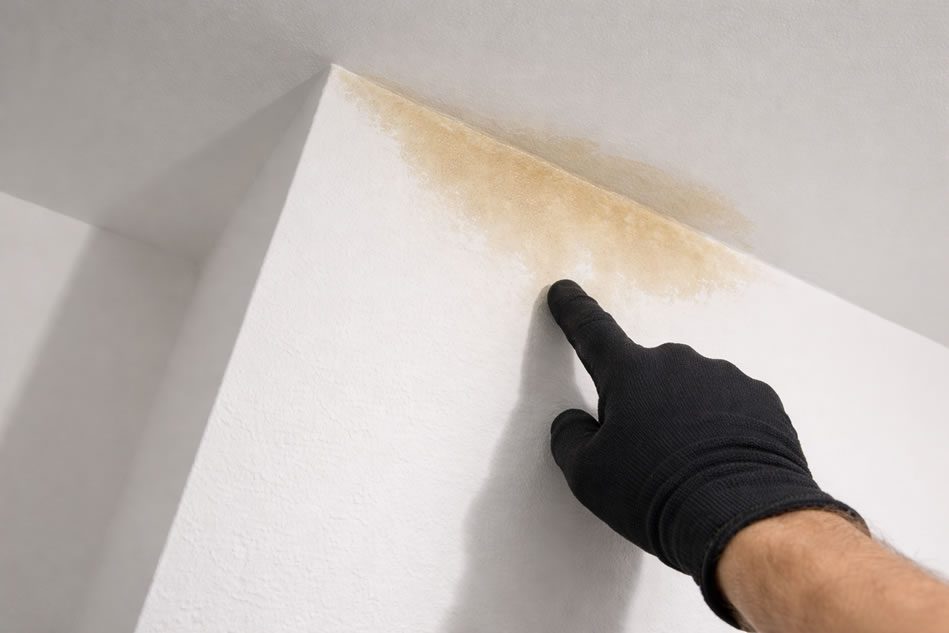
- taking photos of the damp/staining for your quote request
Avoid climbing on the roof. It’s not worth the risk.
What to check before hiring a roofer
Ask for:
- a written explanation of the likely entry point
- a clear scope (cap/cowl, flashing, flaunching, repointing, brickwork)
- access method (ladders/tower/scaffolding)
- proof of public liability insurance
- before/after photos where practical
- warranty/guarantee terms (especially for leak repairs)
Get free quotes to fix water leaking down a chimney breast
Use our enquiry form to request free, no-obligation quotes. Describe where the water appears, when it happens, and add photos if you can. We’ll match your enquiry with suitable local specialists so you can compare options and choose the best fit.
Water leaking down chimney breast FAQs
Why is water coming down my chimney breast when it rains?
In many cases, rain enters through a missing/damaged cowl, cracked flaunching, open mortar joints, or failed lead flashing at the roof junction. A roofer can inspect to confirm the entry point.
Can a chimney cowl stop water coming down the chimney breast?
If the water enters down the flue, yes — a suitable rain cowl or ventilated cap can reduce rain ingress. However, if flashing or masonry is the cause, you’ll need repairs there too.
Is it dangerous to leave it?
It can be. Ongoing water ingress can worsen damp, damage plaster and timbers, and accelerate chimney deterioration. If masonry is loose, it can also become a safety risk.
How do I get accurate quotes?
Provide your postcode, property type, when the damp appears, where it shows up, and photos of the chimney stack and internal staining if safe to take.