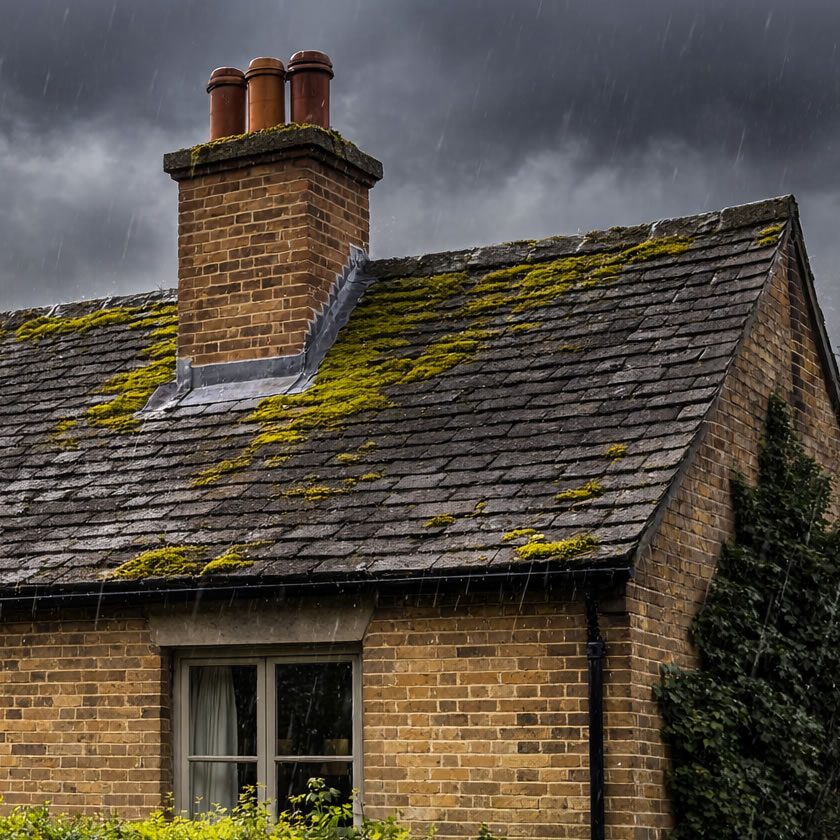

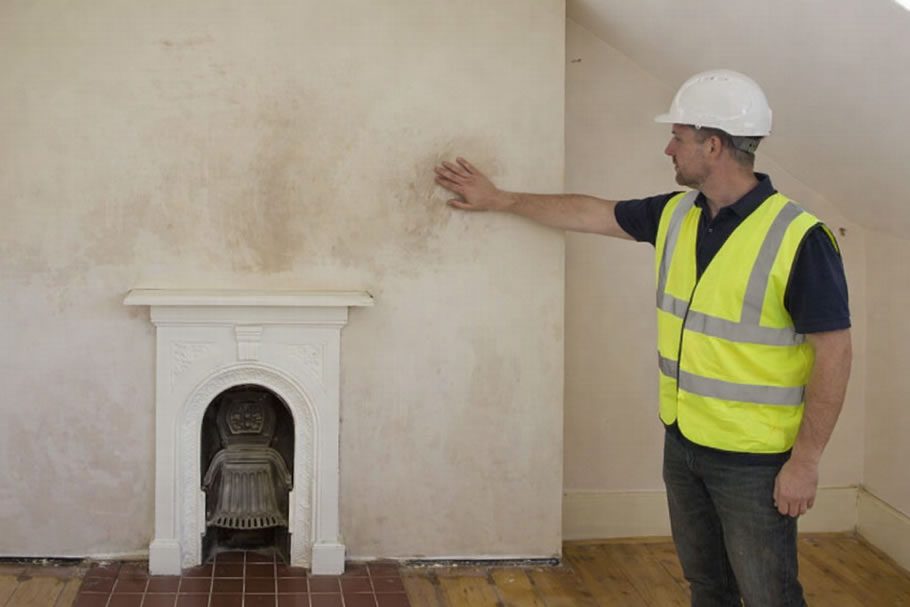
A damp chimney breast is one of those problems that keeps coming back if you treat the symptom instead of the cause. You paint over the stain, the patch dries out, and then the marks return after the next spell of rain — or worse, the damp lingers even when the weather stays dry.
The good news: damp chimney breasts have a handful of common causes. Once you identify which one you’re dealing with, the fix is usually clear.
In this post we’ll cover:
- the top causes of damp chimney breasts in UK homes
- how to tell rain ingress from condensation
- which fixes actually work (and which ones waste money)
- when to get a roofer involved
First: what does “damp chimney breast” look like?
Homeowners describe it in different ways, but the usual signs include:
- brown/yellow staining or “tide marks”
- bubbling paint, peeling wallpaper, blown plaster
- white powdery salts (efflorescence)
- musty smells around a fireplace or boxed-in breast
- mould spots in colder months
Because chimney masonry is porous, damp can spread out wider than you’d expect.
The top causes of damp chimney breasts
1) Rain getting in down the flue (missing/poor cowl or cap)
If rain can fall straight down the chimney pot, it can soak the flue and internal masonry. That moisture then shows up as damp around the fireplace and on the breast.
Clues:
- damp worsens after rain
- the fireplace area smells damp
- the chimney is unused or blocked off
- you may hear birds or find debris (nests often go together with missing cowls)
What actually fixes it:
- fit a suitable rain cowl/cap
- if the chimney is unused, choose a ventilated cowl/cap so airflow continues
- add a bird guard if nesting is common
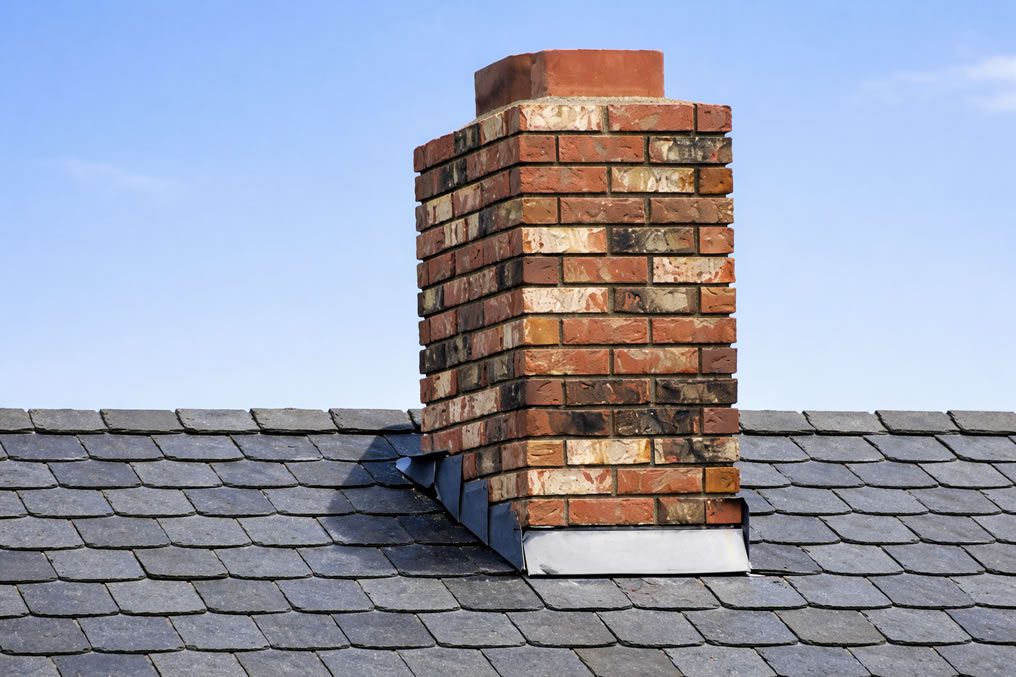
2) Failed lead flashing at the roof junction (classic storm leak)
Flashing seals the roof-to-chimney junction. When lead lifts, cracks, or gets patched repeatedly, water tracks into the roof and can run down inside walls.
Clues:
- damp gets worse in storms or wind-driven rain
- you see ceiling stains near the chimney line
- loft timbers/insulation are damp near the chimney stack
- the damp appears higher up on the breast
What actually fixes it:
- repair or replace chimney lead flashing
- renew step flashing/soakers if needed
- re-point the chase (where lead enters brickwork) properly
3) Cracked flaunching at the top of the stack (top-of-chimney water entry)
Flaunching is the mortar/cement around the chimney pots at the very top. If it cracks, water pours into the stack from above.
Clues:
- the pot looks loose or slightly tilted
- water pools on top of the stack after rain
- damp improves in summer but returns each winter
- mortar fragments show up in gutters after windy weather
What actually fixes it:
- renew the flaunching with correct falls
- re-bed or replace loose chimney pots
- check cowls/caps are secure and suitable
4) Open mortar joints and porous brickwork (the stack acts like a sponge)
When mortar joints crack and recess, the chimney absorbs rain. In heavy weather, it saturates and feeds damp into the breast.
Clues:
- mortar looks sandy, cracked or missing
- bricks look weathered or “blown” (spalling)
- damp appears after rain and can linger for days
- the stack looks generally tired, not just one small defect
What actually fixes it:
- chimney repointing (proper raking out and new mortar)
- replace spalled/damaged bricks where needed
- fix the moisture source too (flashing, flaunching, caps) so the repair lasts
5) Condensation in an unused chimney (often mistaken for a leak)
Unused chimneys can get damp even without rain. Moist air condenses inside the cold flue, and the moisture soaks into the chimney breast.
Clues:
- damp persists during dry spells
- it’s worse in colder weather
- the fireplace is sealed tight with little airflow
- you get a musty smell without rain
What actually fixes it:
- improve ventilation at the top with a ventilated cap/cowl
- ensure appropriate airflow at the fireplace opening (where suitable)
- avoid sealing the chimney completely airtight
6) Blockages, nests and debris holding moisture
Bird nests and debris can trap moisture and stop air moving through the flue, which increases damp risk.
Clues:
- scratching noises, twigs, or debris
- strong smells
- soot/debris falling into the fireplace
What actually fixes it:
- fit a bird guard and suitable cowl
- arrange safe clearing/inspection (don’t DIY if unsure)
Quick test: rain ingress or condensation?
Timing helps you diagnose the likely cause:
| Clue | More likely rain ingress | More likely condensation |
|---|---|---|
| Damp appears after rain | ✅ | Sometimes |
| Damp persists in dry spells | Sometimes | ✅ |
| Worse in storms/wind | ✅ | Unlikely |
| Worse in cold spells | Sometimes | ✅ |
| Musty smell with no rain | Unlikely | ✅ |
Often, unused chimneys suffer from both rain entry and poor ventilation — so the best fix can involve a ventilated cowl plus checking flashing and flaunching.
What doesn’t work (or only works briefly)
Painting over it
Stain-block paint can hide marks, but it doesn’t stop moisture. The stain usually comes back.
Sealing everything airtight
If the chimney is unused, sealing it up often traps moisture and makes damp worse.
Smearing sealant around the chimney
Sealant patches around flashing rarely last because lead and roof coverings move with weather.
The main rule: fix the entry point and improve ventilation, then redecorate.
What to do before you redecorate
To stop stains returning:
- Fix the cause (cowl/flashing/flaunching/repointing/ventilation)
- Allow the breast to dry properly
- Repair plaster if needed
- Use a stain-blocking primer
- Then redecorate
If you redecorate too soon, damp and salts can push through again.
When to call a roofer
Book an inspection if:
- damp worsens after storms
- you can see lifted flashing or cracked flaunching
- bricks look spalled or mortar is missing
- you notice debris falling into gutters or onto the ground
- the chimney pot looks loose
Chimney work involves height and risk. A roofer can diagnose the entry point and recommend the safest repair.
Get help fixing a damp chimney breast
If your chimney breast is damp, the right fix depends on the cause. You can request free, no-obligation quotes from local specialists. Add photos of the chimney stack and the internal damp if you can — it helps roofers quote more accurately.
FAQs
Why is my chimney breast damp even when it hasn’t rained?
Condensation in an unused flue is a common cause, especially in colder months. Poor airflow traps moisture. A ventilated cap/cowl and improved ventilation can help.
Will a chimney cowl fix damp?
It can if rain enters down the flue. However, if flashing, flaunching or porous mortar causes the damp, you’ll need repairs there too.
How long does a damp chimney breast take to dry?
It varies. Chimney masonry holds moisture. Once you stop the moisture source, drying can take weeks or longer depending on ventilation and how saturated it is.
Should I replaster a damp chimney breast?
Only after you fix the cause and let the area dry. Otherwise damp and stains can return through the new plaster.